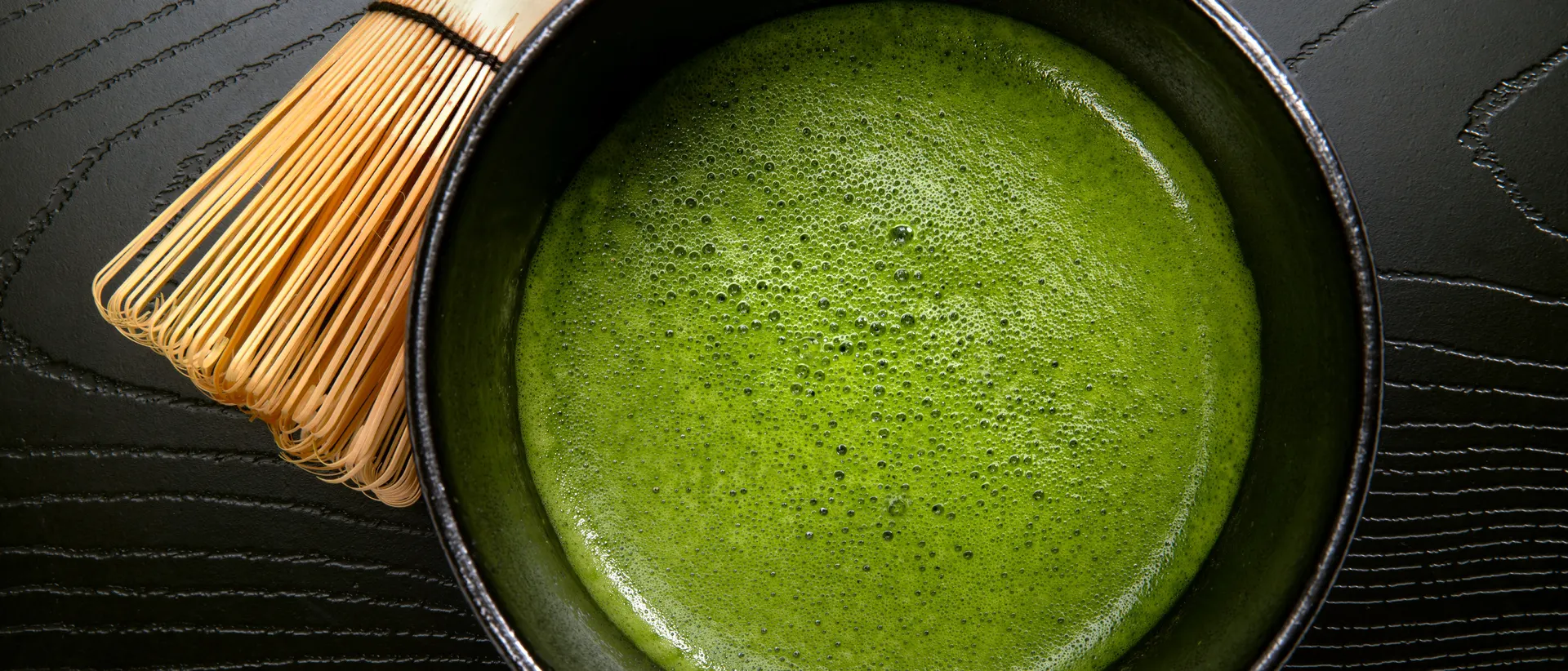
Matcha is a tea type, not just a grade.

What matters is how the leaf is grown, shaded, steamed, dried, and milled — and how the finished powder performs in use. Nagamine Seicha works with limited 2026 lots from named Shizuoka producers, selected for origin, aroma, color, texture, and intended purpose.

Shizuoka sits between Japan’s large-volume matcha regions and its highest-priced prestige origins. This page is for cafés, tea shops, importers, and small brands seeking honest, well-selected Japanese matcha in realistic wholesale quantities — not commodity-scale volume.

Our definition of matcha

At Nagamine Seicha, we label a tea as matcha only when it meets all three of the following criteria — based on the tencha and matcha definitions of the Japan Tea Central Public Interest Incorporated Association (Nihon Cha-gyo Chuokai) and ISO TR 21380:2022.

  1. I Covered cultivation — tencha grown under shade for two to three weeks (oishita saibai).
  2. II Tencha kiln drying — steamed and dried without rolling in a dedicated tencha furnace.
  3. III Fine milling from tencha — stone mill or ball mill depending on lot.

Only tea made from 100% tencha meeting these criteria is called matcha.

We do not call powdered sencha, unshaded green tea powder, or moga-cha “matcha.” Moga-cha is a tencha-like dried tea made on modified sencha lines — it has value as a powdered green tea ingredient, but it is not matcha under our naming standard.

We also avoid broad grade labels as the main explanation of quality. For wholesale partners, each lot is described by origin, producer, harvest, cultivation, milling method, and intended use.

Documentation is prepared lot by lot. We are progressively introducing independent testing for pesticide residues, heavy metals, microbiology, and nutrition analysis across our matcha lots. Available reports vary by lot and timing; please contact us for the current test status, serving-size assumptions, and California buyer review.

Lot-level documentation
  • Pesticide residue analysis: TAC200 domestic tea panel with export option, available on request, depending on current lot status
  • Heavy metals: lead, cadmium, arsenic, and mercury testing, available on request, depending on current lot status
  • Microbiology: aerobic plate count and coliform testing, available on request, depending on current lot status
  • Nutrition analysis: available on request, depending on current lot status
  • Lot-level reports: available on request, depending on current test status

Minimum order 1 kg per lot. The 2026 crop is held as tencha in chilled storage and milled to order through the year.

Ikeda-en Yabukita tencha leaves, Shizuoka Tencha 碾茶
Ikeda-en Yabukita matcha powder Powder 粉末
Ikeda-en Yabukita matcha powder, sifted Sifted 篩
Ikeda-en Yabukita whisked matcha Whisked 点
Award-Winning Producer

Ikeda-en Yabukita

やぶきた(池田園)
Ikeda-en · Shizuoka
Confirmed for 2026 Ships from June 2026 · Documentation available by lot, depending on current test status
USD 120/kg · FOB Yaizu

From Ikeda-en — a dedicated single producer and Triple Platinum winner at the Japanese Tea Award (twice in the deep-steamed tea category, once in the second-flush category). This Yabukita matcha reflects that pedigree: a strong, full umami and a rounded, generous body. A producer-led selection for buyers who value a documented record of excellence.

ProducerIkeda-en — Triple Platinum, Japanese Tea Award
CultivarYabukita
HarvestFirst flush
ShadingCovered cultivation
GrindingBall mill
PesticideLot-level pesticide residue report available on request, depending on current test status
PositioningAward-winning single producer; strong umami, generous body.
Okabe Yabukita tencha leaves, Shizuoka Tencha 碾茶
Powder
photo arriving
Sifted
photo arriving
Whisked
photo arriving
Brick-Kiln Tencha

Okabe Yabukita

やぶきた他(岡部産)
Okabe, Shizuoka
Confirmed for 2026 Brick-Kiln Tencha Ships from June 2026 · Documentation available by lot, depending on current test status
USD 130/kg · FOB Yaizu

From the hillsides of Okabe — a region known for its refined, elegant tencha. What sets this selection apart is the use of traditional brick-kiln drying, which imparts a distinctive depth of aroma and a clean, structured umami. .

OriginOkabe (brick-kiln tencha)
CultivarYabukita-based blend
HarvestLate May, first flush
ShadingCovered cultivation
GrindingBall mill
PesticideLot-level pesticide residue report available on request, depending on current test status.
PositioningTraditional brick-kiln drying delivers distinctive aroma.
Tsuyuhikari tencha leaves, Shizuoka Tencha 碾茶
Tsuyuhikari matcha powder Powder 粉末
Tsuyuhikari matcha powder, sifted Sifted 篩
Tsuyuhikari whisked matcha Whisked 点
Rare Cultivar

Tsuyuhikari

つゆひかり(菅山園)
Sugayama-en · Makinohara, Shizuoka
Confirmed for 2026 Ships from June 2026 · allocated by order date
USD 135/kg · FOB Yaizu

A rare cultivar at single-estate scale — distinct freshness with restrained umami. Tsuyuhikari is a rare cultivar — produced in Japan in only modest volumes — selected for a deeper umami profile and vivid green color potential. From Sugayama-en on the Makinohara plateau, with the cultivation depth and consistency a single estate of this scale can provide. Selected for specialty cafés, straight tasting, and premium latte programs. Allocations confirmed by order date.

ProducerSugayama-en
CultivarTsuyuhikari (single)
HarvestMid-May, first flush
ShadingCovered cultivation
GrindingBall mill
PesticideLot-level pesticide residue report available on request, depending on current test status
PositioningA rare cultivar at single-estate scale — distinct freshness with restrained umami.
Saeakari tencha leaves, Shizuoka Tencha 碾茶
Saeakari matcha powder Powder 粉末
Saeakari matcha powder, sifted Sifted 篩
Saeakari whisked matcha Whisked 点
Single Cultivar

Saeakari

さえあかり(菅山園)
Sugayama-en · Makinohara, Shizuoka
Confirmed for 2026 Ships from June 2026 · Allocations open
USD 140/kg · FOB Yaizu

From Sugayama-en on the Makinohara plateau — one of Japan’s major tea regions. Saeakari is a single-cultivar matcha prized for its bright character and clear, lifted finish, selected for straight tasting, premium latte programs, and café use. A confirmed selection for the 2026 vintage, with allocation flexibility for first-time partners.

ProducerSugayama-en
CultivarSaeakari (single)
HarvestMid-May, first flush
ShadingCovered cultivation
GrindingBall mill
PesticideLot-level pesticide residue report available on request, depending on current test status
PositioningSingle-cultivar matcha at workable scale — straight tasting, premium latte, and café programs.
Saemidori tencha leaves, Shizuoka Tencha 碾茶
Saemidori matcha powder Powder 粉末
Saemidori matcha powder, sifted Sifted 篩
Saemidori whisked matcha Whisked 点
Flagship · Single Cultivar

Saemidori

さえみどり(丸尾製茶)
Maruo Seicha · Fukuroi, Shizuoka
Platinum Award Producer Planned for 2026 Ships from June 2026 · Allocation by reservation
USD 150/kg · FOB Yaizu

From Maruo Seicha — a two-time Platinum Award winner at the Japan Tea Awards (second-flush category). Saemidori is a distinctive cultivar prized for its gentle sweetness, vivid green colour, and silky mouthfeel. The combination of a single estate, a single cultivar, and a celebrated producer makes this a rare and compelling offering for specialty tea merchants. Reservation-based allocation for the 2026 vintage.

ProducerMaruo Seicha
CultivarSaemidori (single)
HarvestMid-May, first flush
ShadingCovered cultivation
GrindingBall mill
PesticideLot-level pesticide residue report available on request, depending on current test status
PositioningOur flagship selection for the 2026 lineup — award-winning producer with deep umami.
— A tea merchant, not just a brand

Why a Shizuoka tea merchant.

Nagamine Seicha was founded in 1876 in Yaizu, Shizuoka — not as a brand, but as a chasho (tea merchant). For five generations, our work has been sourcing and supplying tea to buyers who value consistency and provenance.

01 Sourcing

Named producers, not anonymous lots.

Every selection is traceable to a named Shizuoka producer — Sugayama-en on the Makinohara plateau, Maruo Seicha in Fukuroi, Ikeda-en, and the Okabe brick-kiln producers. Not a single estate, but a working portfolio, selected each season. You know exactly whose tea you are buying.

02 Supply

From 1 kg samples to lot-based supply.

We supply by the lot, starting from a 1 kg sample. For B2B buyers, this means you can evaluate a specific lot before committing, with continuity across crop years where available.

— Tea taxonomy, plainly stated

What makes matcha “matcha”?

Matcha vs Powdered Green Tea — Nagamine Seicha's Three Criteria A diagram defining what qualifies as matcha at Nagamine Seicha, based on three criteria: shaded cultivation, tencha-kiln drying without rolling, and fine milling by stone or ball mill. Anchored to ISO TR 21380:2022 and the Japan Tea Central Public Interest Incorporated Association standard. — Nagamine Seicha's three criteria — From the same plant — Camellia sinensis — two roads diverge. CRITERION 01 · CULTIVATION Shaded for two to three weeks. 覆い下栽培(2〜3週間) → MATCHA Tea plants are covered with yoshizu, komo, or cheesecloth for 2–3 weeks before harvest. Boosts L-theanine, deepens green. → POWDERED GREEN TEA (uncovered) Grown in open field — full sunlight. Lower L-theanine, higher catechins, less vivid green. CRITERION 02 · DRYING Steamed, never rolled — dried in a tencha kiln. 蒸熱後、揉まずに碾茶炉で製造された碾茶 → MATCHA (tencha as the raw material) Steamed briefly, then dried flat in a tencha furnace. Veins removed. Yields tencha — the matcha raw material. → POWDERED GREEN TEA (rolled / モガ製) Steamed, then rolled (the sencha route), or kiln-dried without meeting the shaded-cultivation criterion above. CRITERION 03 · MILLING Finely milled from tencha by lot. 茶臼またはボールミルで微粉末化 → MATCHA Stone mill or ball mill, depending on the lot. Or ball mill for volume runs. Both yield 5–20μm powder. → POWDERED GREEN TEA (pulverizer / others) Pulverizer or industrial grinder — coarser, faster. For café, RTD, pastry, and culinary applications.
If all three are met

Matcha — our five 2026 selections

Ikeda-en Yabukita, Saeakari, Saemidori, Okabe Yabukita, Tsuyuhikari. All first-flush, all shaded, all tencha-kiln dried, and finely milled from tencha by stone mill or ball mill depending on lot. This is what we call matcha.

If even one is not met

Powdered green tea — honestly labeled

Our Fukuroi Autumn Tencha Powder follows part of the matcha-processing route — tencha-kiln dried and finely milled. But the leaves are uncovered, autumn-flush. Without covered cultivation, we do not call it matcha.

Powdered green tea for foodservice is a separate product, listed under Ingredients — not under matcha.

iii.

Common specifications & terms

Product

Raw materialCovered-cultivation tencha; 2026 lineup focuses on first-flush lots
GrindingStone mill or ball mill depending on lot — milled from tencha held in chilled storage
PesticideLot-level pesticide residue report available on request, depending on current test status
Okabe Yabukita lot available on request
DocumentationAvailable by lot, depending on current test status
PackagingNitrogen-flushed aluminum bags
Minimum order1 kg per lot

Commercial

PricingOn inquiry — quoted per relationship and lot
Currency & termsUSD, FOB Yaizu (CIF Bangkok / HK available on request)
PaymentT/T advance or L/C at sight
ShippingAir freight recommended
Lead timeTypically 2–4 weeks from order confirmation
Sample policyAvailable for qualified buyers, please inquire
Request samples Wholesale Inquiry
Beyond Matcha

Other Japanese teas worth exploring.

If you appreciate the umami, color, and craft behind Japanese matcha, these teas show different expressions of Japanese green tea.

Gyokuro

Gyokuro by Tohei Maejima

If you appreciate the depth of matcha umami, gyokuro represents one of the highest expressions of Japanese green tea craft.

View Gyokuro
Sencha · Chiran

Asatsuyu Fukamushi Sencha

A deep-steamed sencha with a vivid jade liquor and a rich, smooth profile that may appeal to matcha drinkers.

View Asatsuyu
Samples

Evaluate the matcha lineup.

Samples are arranged individually based on inquiry. Please use the Contact form.

Request samples

Definition of Matcha in Japan

In Japan, the term “matcha” is defined by the Japan Tea Central Public Interest Incorporated Association (Nihon Cha-gyo Chuokai). Powdered green tea products that do not meet this definition are classified as “green tea powder,” not matcha.

MATCHA

Matcha is a finely ground powder produced from tencha using a stone mill or an equivalent grinding device.

Three Requirements

  • Shading Tea leaves harvested from fields shaded for approximately 2 to 3 weeks before harvest, using shade nets, reed screens, or straw mats.
  • Tencha processing Steamed and dried in a dedicated tencha furnace, without rolling.
  • Fine grinding Ground into a fine powder using a stone mill or an equivalent device.

Harvest season: not specified by the definition.

Raw material purity: 100% tencha. If any non-tencha material is blended in, the resulting product is no longer classified as matcha.

GREEN TEA POWDER

Powdered green tea that does not meet the definition of matcha.

Examples of source materials that do not qualify as matcha

  • Tea leaves grown without shading
  • Tea leaves with an insufficient shading period (less than 2 to 3 weeks)
  • Sencha (rolled tea leaves)
  • Tea leaves dried by methods other than a tencha furnace

Powdered products made from these materials, whether used alone or blended with tencha, are classified as green tea powder, not matcha.

Source: Japan Tea Central Public Interest Incorporated Association (Nihon Cha-gyo Chuokai), “Green Tea Labeling Standards” (March 2019 edition).